
The story of Africa’s green finance revolution is not being written in boardrooms alone. It is un-folding in the energy farms of Morocco, the solar villages of Kenya and the biodiversity corri-dors of Gabon.
Across the continent, a new financial movement is reshaping how capital flows, one that prom-ises profit with purpose and growth that heals rather than harms.
Over the past four years, African green finance has grown from a concept to a competitive asset class. According to the African Development Bank (AfDB), green bond issuances in Africa sur-passed USD 6 billion by early 2025, up from just USD 2 billion in 2021.
Kenya, Nigeria, Egypt and South Africa have taken the lead, mobilizing capital through sovereign and corporate green bonds that fund renewable energy, sustainable agriculture and climate ad-aptation. Yet beneath this momentum lies a structural evolution. Traditional financiers, once hesitant about green projects, are now integrating Environmental, Social and Governance (ESG) frame-works into their lending models.
The reason is clear: sustainability has become a metric of risk and reward. For instance, Nigeria’s Access Bank and South Africa’s Standard Bank now link executive bonuses to green finance per-formance metrics, a move that signals institutional commitment beyond token pledges.
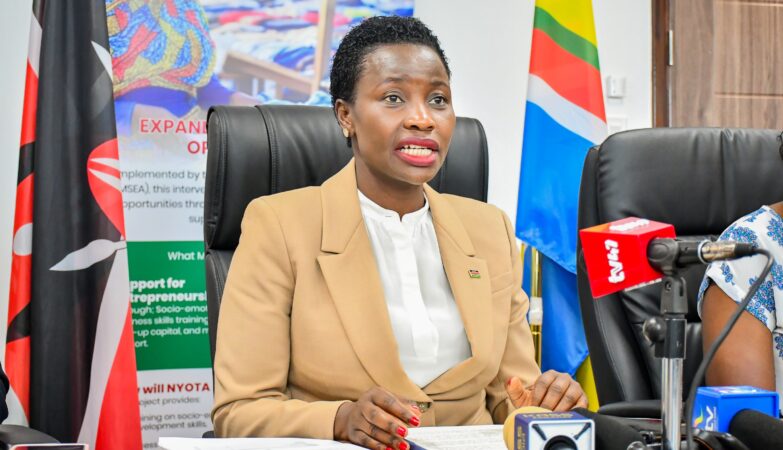
In Nairobi, Family Bank’s CEO Rebecca Mbithi reflects on this shift: “Green finance is no longer a CSR conversation. It is a strategic growth frontier. Clients, investors and regulators are all asking the same question, how sustainable is your business model?” Her words capture a continent-wide awakening that climate resilience and economic competitiveness are intertwined.
Between 2021 and 2025, private investment in renewable energy projects across Africa ex-panded by nearly 40 percent annually, driven by falling technology costs and policy incentives.
Egypt’s Benban Solar Park remains a flagship, while Kenya’s Menengai geothermal project demonstrates that green investments can yield both high returns and energy independence. However, challenges persist: limited data, inconsistent regulatory frameworks and currency risk continue to limit investor confidence.
Still, the narrative is shifting from barriers to breakthroughs. African governments are develop-ing green taxonomies and climate finance frameworks to align national priorities with interna-tional capital.
The African Union’s Green Recovery Action Plan and the African Continental Free Trade Area (AfCFTA) are opening pathways for cross-border green finance and technology sharing.
The future implications are profound. Africa’s population will double by 2050 and its urbanisa-tion rate is among the world’s fastest.
Without green finance, the costs of adaptation could cripple economies. But with it, the conti-nent could leapfrog into a low-carbon, high-growth model that redefines global investment pri-orities.
For investors, this is more than an opportunity, it is a rebalancing of global capital. As European and Asian markets tighten environmental regulations, African green projects offer attractive yields with tangible social and environmental impacts.
The International Finance Corporation (IFC) estimates that Africa’s climate-smart investment potential could reach USD 3 trillion by 2030, if financing ecosystems mature and policies remain stable.
This transformation also raises deeper questions for Africa’s policymakers. How can nations en-sure equitable access to green capital, so that smallholders and microenterprises benefit along-side large corporates?
How can financial inclusion align with carbon neutrality? The answers lie in designing local solu-tions that merge innovation with inclusivity.
When seen through the lens of Africa’s development, the rise of green finance is not just a mar-ket trend, it is a defining test of vision and governance.
Every green dollar invested today writes part of the continent’s future economic story. The choices made in 2025 will determine whether that story becomes one of resilience and renewal.
What this means for Africa is clear: the continent stands at the threshold of an era where sus-tainability is synonymous with competitiveness.
Green finance offers Africa the chance to own its growth narrative, to create wealth that en-dures, industries that sustain and cities that breathe. It is not just finance with a conscience; it is finance with foresight and Africa is learning to lead the world in it.