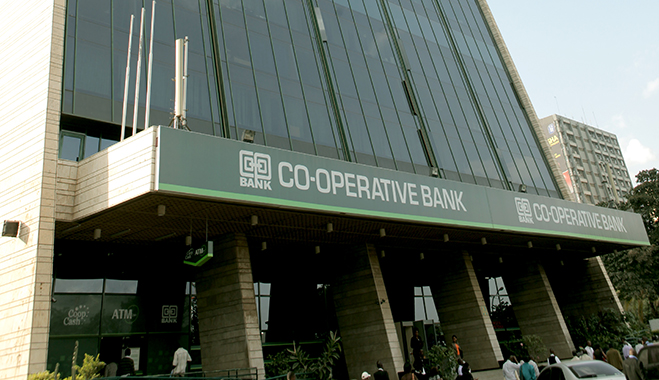

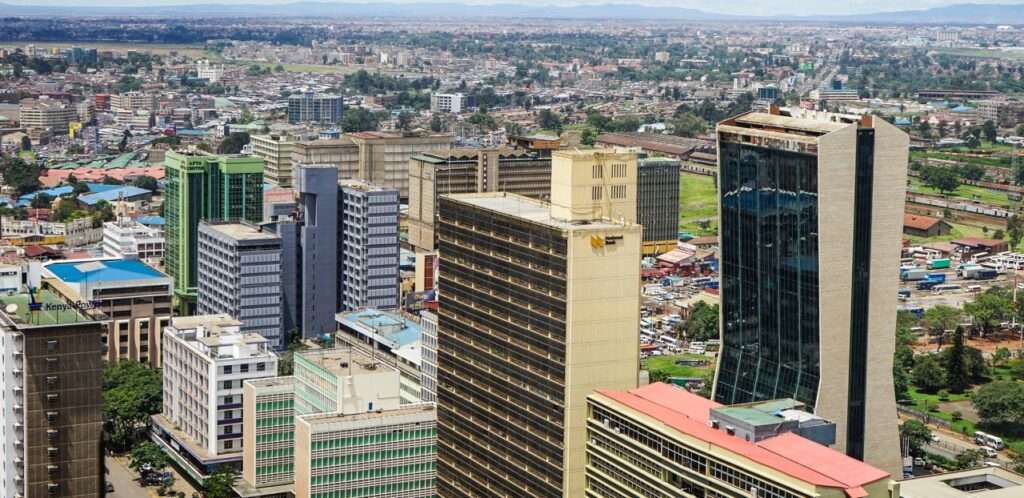
A short drive through Nairobi’s Kilimani district or Kampala’s Nakasero neighborhood tells a story far louder than any official report.
Cranes dominate skylines. Steel, glass, and concrete are replacing the cityscapes of old. And behind this transformation lies a rising tide of capital, migration, innovation, and geopolitical interest that is redefining East Africa’s urban future.
At the heart of this construction surge is Nairobi, whose position as a regional tech and financial hub has drawn a wave of multinationals, diplomatic missions and returning diaspora.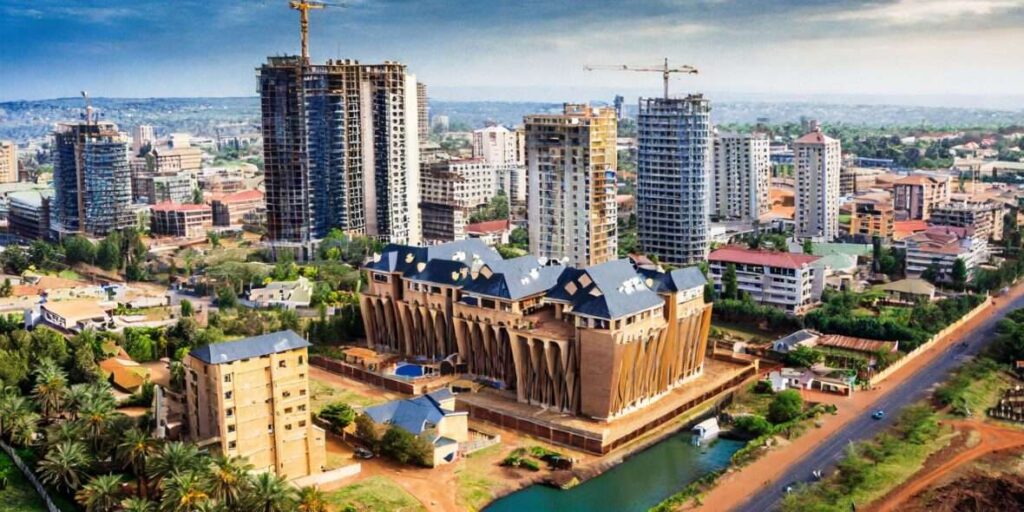
This influx has created unrelenting demand for premium housing, commercial space, and mixed-use developments. Developers are responding in kind. From Two Rivers and The Pinnacle to Montave and Garden City, East Africa’s largest economy is no longer just building, it’s building bold.
Uganda and Rwanda are not far behind. Kigali’s Vision City and Kampala’s Kingdom Kampala development signal a shift in real estate ambition. Governments are aligning infrastructure, urban planning and foreign investment to support a more structured and inclusive growth model.
In these cities, master-planned communities, affordable housing schemes, and smart city experiments are reshaping what urbanization means in a post-pandemic Africa.
The demand isn’t only being driven by elite consumption. A growing middle class, rapid rural-urban migration, and improved mortgage access are expanding the real estate base.
According to HassConsult, residential property prices in Kenya have shown a steady upward trend, with the rental market remaining resilient even through economic shocks.
Investors from China, Turkey, and the Gulf continue to funnel resources into retail malls, office towers, and logistics parks across East Africa’s key corridors.
Yet, not everything is on solid ground. Critics warn of speculative bubbles, ghost developments, and affordability crises. In Nairobi, for example, the gap between high-end supply and middle-income demand is widening.
In Kampala, zoning inconsistencies and slow approval processes hamper progress. Kigali, though more planned, faces challenges in financing large-scale housing for low-income populations.
Despite these risks, there’s an undeniable optimism in the air. Real estate expos attract global attention. PropTech startups are digitizing property access and valuation.
And regional banks, like Equity and NCBA, are offering innovative mortgage products tailored for younger buyers. In Rwanda, green building codes are being implemented to ensure sustainability is not sacrificed for speed.
The future of East African cities is being drafted now, in floor plans, zoning maps, investment briefs, and policy meetings.
The shape they take over the next decade will define not just housing, but livelihoods, mobility, and the quality of urban life for millions. For CEOs, investors, policymakers, and real estate entrepreneurs, this is not a trend to watch from a distance. It’s a frontier to shape.